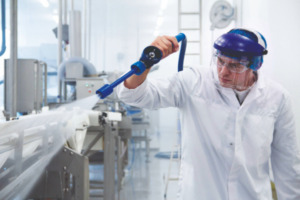
Simpel en snel besparen in uw reinigingsproces

Residues of quaternary ammonium compounds in food
Quaternary ammonium compounds (QAC) are active biocide substances widely used in disinfectants utilised in the food industry to sanitise surfaces and facilities. Its main use derives from its properties: They have a broad biocide spectrum, being effective against the most common pathogens in the food industry They are safe when properly handled by operators They […]
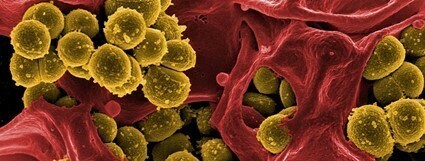
Staphylococcus aureus in the food industry
Bacteria commonly found in the environment, present in food industries on floors, tools and surfaces and in water and air…, they can live in humans and animals. They are one of the most resistant non-spore-forming pathogens and can survive for long periods of time in low humidity environments. They grow between 7ºC up to 47.8ºC, […]

Archaea: A microbiological world yet to be discovered
It is a group of prokaryotic morphology unicellular microorganisms (without nucleus), which are part of one of the three great living beings’ domains: archaea, bacteria and eukaryotes. Archaea are microscopic organisms, (size between 0.1 μm to more than 15 μm), which may have flagella. Their cells are surrounded by a cover (cell wall) with membrane […]

Components and functions of the bacterial biofilms’ matrix
One of the biggest concerns in terms of hygiene in the food industry is the formation of bacterial biofilms. Biofilms are groups of microorganisms that accumulate on a solid-liquid interface and are surrounded by a mucilaginous matrix[1]. The biofilm matrix is the extracellular material, mostly produced by the microorganisms themselves, in which the biofilm cells […]

Perazijnzuur en het coronavirus
De huidige coronapandemie (COVID-19) is veroorzaakt door het SARS-CoV-2-virus. Een ingekapseld coronavirus, gevormd door een enkele RNA-streng. Het virus wordt voornamelijk overgedragen via de lucht en door contact met oppervlakken. Oppervlaktedesinfectie is daarom prioriteit in de strijd tegen de pandemie, naast uiteraard de maatregelen voor persoonlijke hygiëne en bescherming (maskers, handschoenen, social distancing, quarantaine, etc.). […]

Pluimveeverwerkende Industrie
Wat zijn de belangrijkste hygiëne-issue in de pluimveesector en welke oplossingen zijn er? Lees ons artikel over reinigings- en desinfectiestrategieën in deze sector. Auteurs: Alma Milvaques, Juan José Canet, Carmen Donet, Jaime Balbastre BETELGEUX-CHRISTEYNS De pluimveesector speelt in Europa niet alleen een belangrijke rol als leverancier van vlees, maar ook op cultureel en economisch vlak. In […]

Sustainable chemistry and more
In the eyes of the general public, chemical companies do not have the best reputation. They are often associated with water and air pollution, health risks via contact with products, danger of accidents in the factories, dumping of chemical waste… Even though the chemical industry has dramatically improved its environmental performance, the public’s perception goes […]
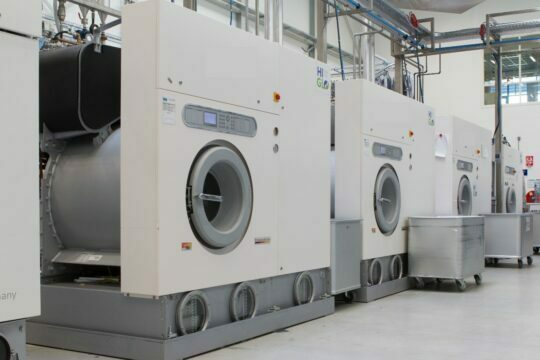
The Drycleaning sector favours the environment
Innovation in the laundry industry has led to many new developments allowing the drycleaning sector to re-qualify itself to the great benefit of the environment as well as the end-user. Biodegradable solvents Chemical formula optimisations mean that a wider range of textiles can now be confidently cleaned in a more sustainable manner. When it […]

Metagenomics applied to the food industry
Controlling microbiological contamination is of vital importance for the food industry to prevent food alterations or risks for consumers’ safety. Microbiological controls in food and work environments usually revolve around assessing microbiological indicators, for example, counting total aerobic microorganisms or enterobacteria, or identifying the presence of pathogenic microorganisms such as Listeria monocytogenes, Salmonella or Campylobacter. […]